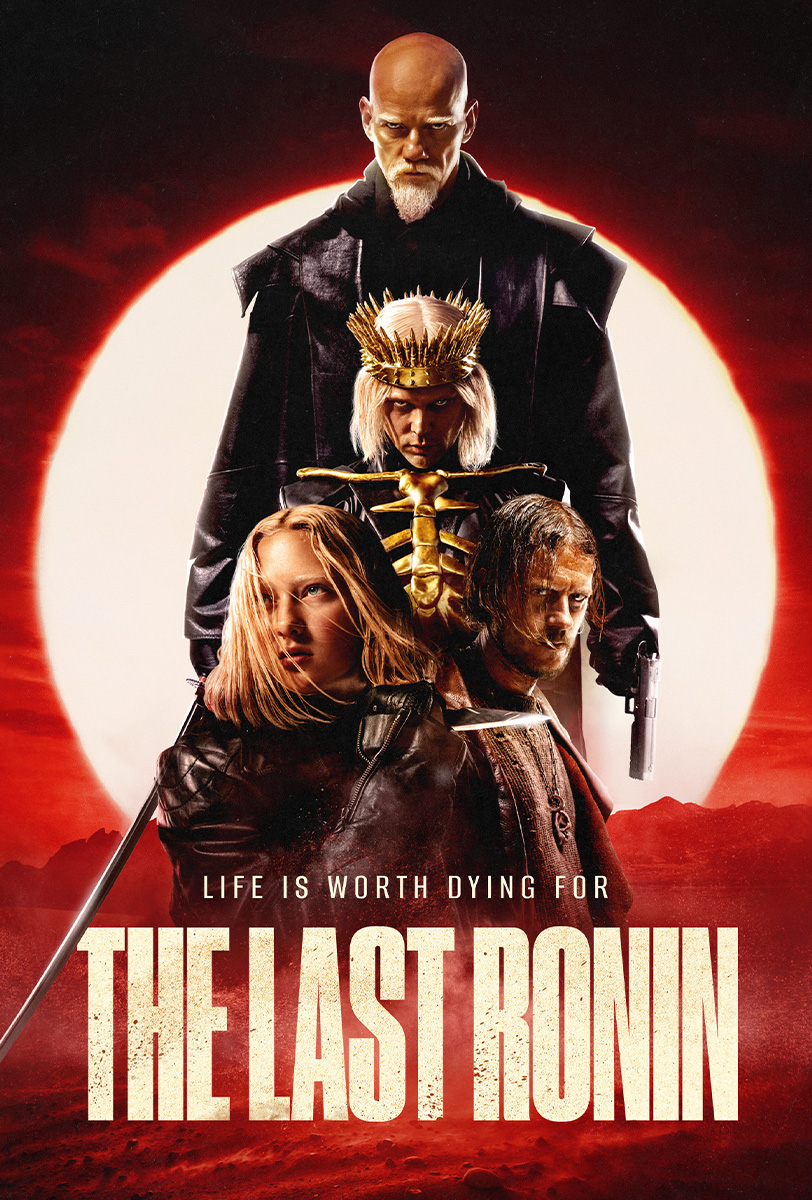
The hunting lodge scene introduces the Ronin in his element. The primal violence is swift and brutal, underscoring his skill and his weariness. There’s a code in the valley: Do not strike first, or you will be killed. Ronin is never the first to strike.
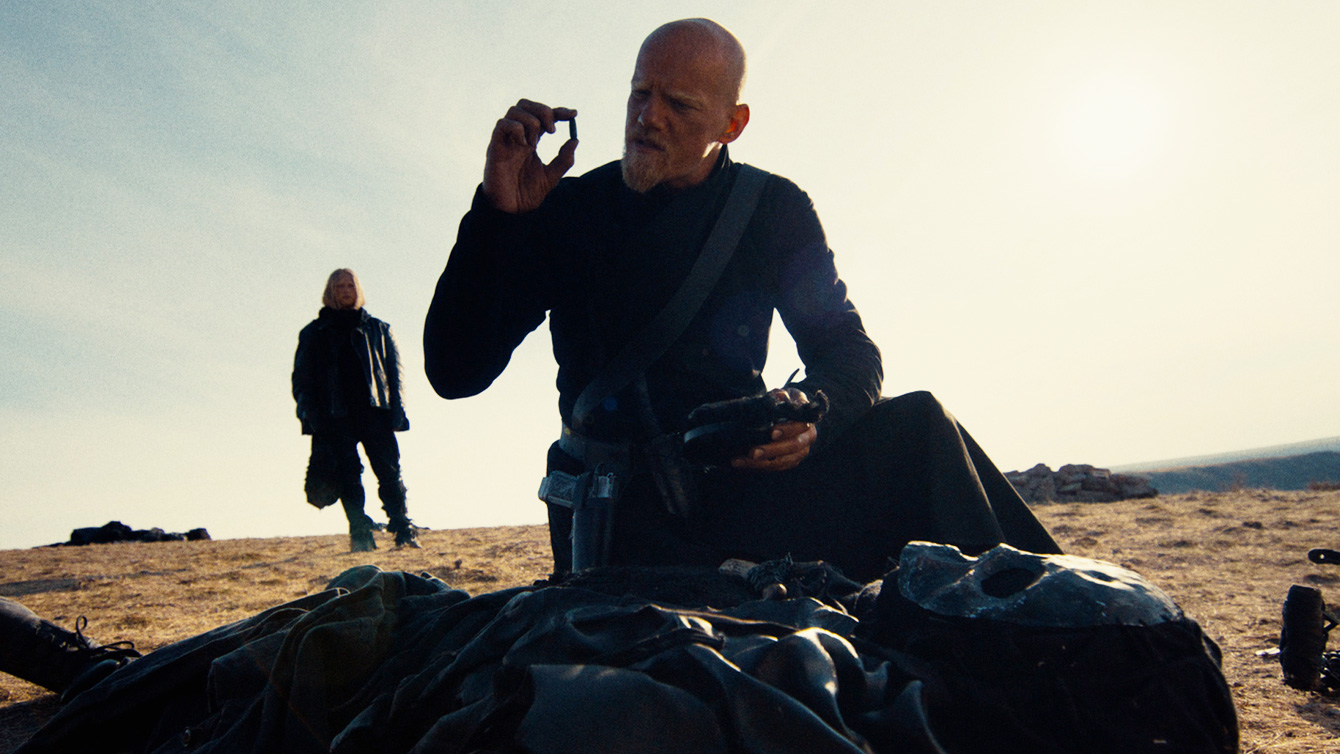
It’s here that he encounters the girl for the first time, a cautious young woman with her own sharp instincts. She disarms his suspicion by speaking of a mysterious ‘high wall’, bringing the McGuffin into play. Offering him far too much for the task, Ronin at first refuses, not wanting to lead the lamb to slaughter. But a random encounter with raiders changes their situation, and the race to the wall becomes a race for life itself.
In their travels, Ronin, who’s been on a lifelong hunt for revenge, sees Maria following a similar path and urges her to change course, but his words are brushed aside. His own journey becomes one of self‑discovery, forcing him to grow beyond the vengeance that has defined his life. Yet the story reminds us that caring enough to share hard truths does not guarantee they will be seen or accepted, underscoring the fragile, painful nature of human connection in a broken world.

The final sequence sees a father fighting for revenge, a father fighting for the right to welcome his child home, and a man trying to free a child from her manifest destiny. In the end, the girl chooses her own fate, making sure the Ronin is the last of his kind. This resolution reinforces the film’s central theme: that even the most determined guidance cannot control another’s destiny. It leaves the audience grappling with the paradox of hope and futility, where legacy is rewritten not by the survivor but by the one who dares to decide.

Beneath the gunfights, bloodshed, and grim landscapes lies a story about trust, loyalty, and the bonds we choose versus the ones we inherit. The uneasy partnership between Ronin and Maria (the girl) transforms into something more profound, asking whether family is defined by blood, by survival, or by sacrifice. In its wildest moments, the film suggests that even in the ashes of civilization, the human need for connection endures. The Last Ronin is an over‑the‑top, dystopian roller coaster that questions revenge, forgiveness, and the idea that peace may heal all. Yet these two people can walk the same wasteland, face the same dangers, even care for each other, and still arrive at different truths. The film acknowledges divergence without judgment, suggesting that growth is not about forcing others to adopt your revelation, but about accepting that each person must choose their own.
The debut feature film from Director Max Shishkin, the film stars Yuri Kolokolnikov (“Game of Thrones,” Kraven the Hunter), Diana Enakaeva (Cosmoball), Daniil Vorobyov (Out of Love), Tikhon Zhzneskiy (Major Grom: Plague Doctor), and Aleksandr Mizev (SLON). THE LAST RONIN also hits Blu-ray™ and DVD exclusively through Amazon on September 16.
https://wellgousa.com/films/last-ronin